
Main Points
- A water heater leaking from the bottom results from sediment buildup, a faulty drain valve, loose connections, or internal tank corrosion.
- Leaks from the tank itself usually cannot be repaired, but drain valve or connection leaks may have a simpler fix.
- A bottom leak in an older water heater often makes replacement more cost-effective than repair.
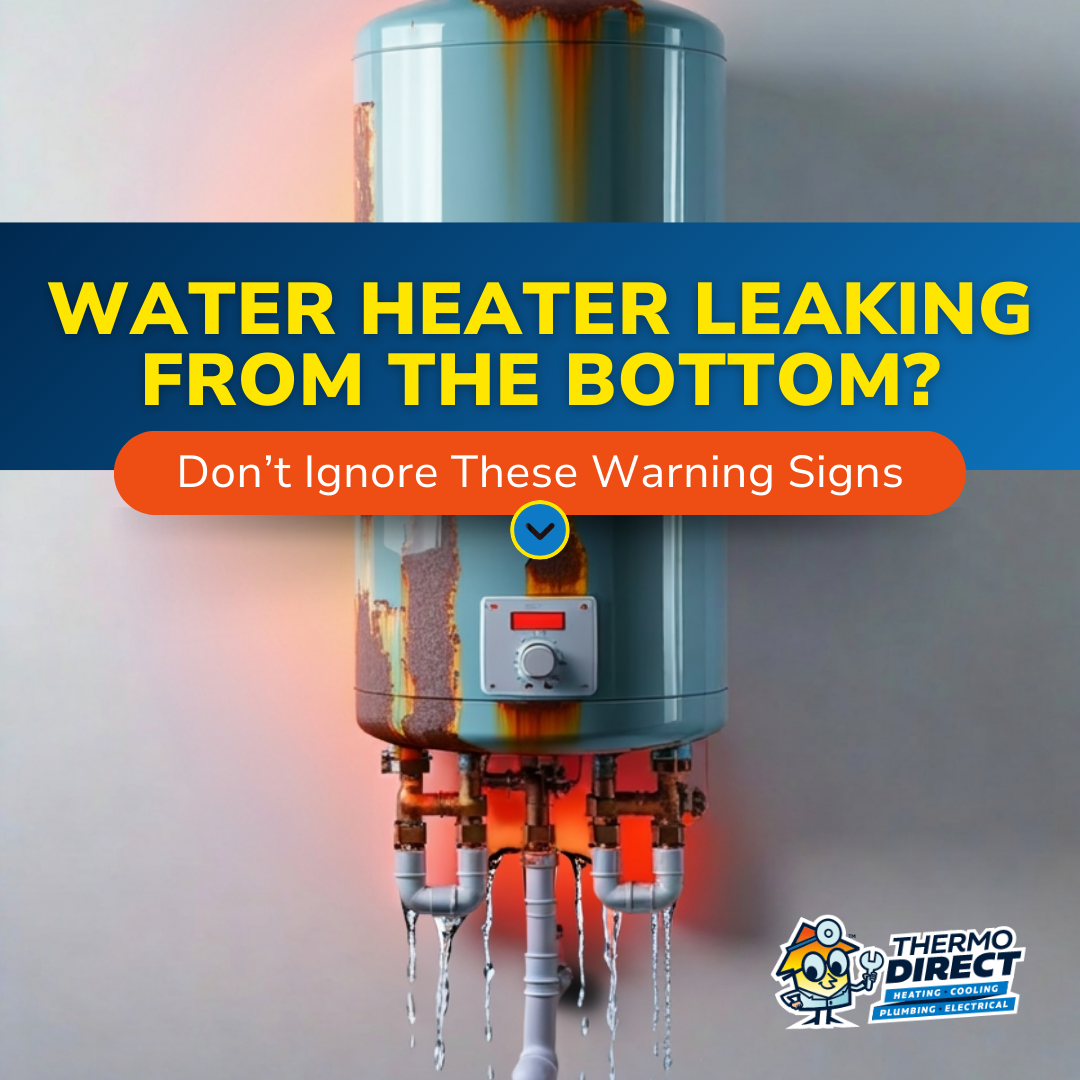
Persistent puddles or even minor drips can be warning signs of water heater problems. If you notice your water heater leaking from the bottom, understanding how leaks develop and other signs to look for can help protect your home’s comfort and safety. At Thermo Direct, our team is ready to assist with expert repair solutions and efficient water heater replacements.
Why Is My Water Heater Leaking from the Bottom?
Leaks from the base of your water heater can stem from minor and repairable issues, while others may signal worsening damage or system failure. Certain parts of a water heater may require replacement throughout its operating life, and routine maintenance may be enough to resolve leaks from the bottom of the unit. If the leak is due to compromised structural integrity, such as a corroded tank, replacement is often the only permanent solution.
Is it a Real Leak or Just Condensation?
In some cases, water droplets or puddles may stem from condensation rather than a leak. When Raleigh’s temperatures drop, cooler air around your water heater causes moisture to collect on the unit’s exterior. Incoming cold water may also temporarily lower the tank’s internal temperature and cause condensation on its warm walls. Condensation on water heaters is common in humid or uninsulated spaces, especially during the winter.
To troubleshoot your water heater for condensation or a leak, wipe the tank and surrounding area dry and place a paper towel where you found puddles. Observe the tank over the next few cycles for water coming from a specific leakage point.
Common Culprits: From Drain Valves to Tank Corrosion
Common causes of leaks from the bottom of your water heater include:
- Sediment buildup: Minerals from the water supply may gradually accumulate and settle at the bottom of the tank, forcing the system to work harder and produce extra heat. Without regular flushing, water heaters are more prone to cracks and leaks.
- Cracked or corroded tank: Typically occurring due to heater age or neglected maintenance, corrosion eats at the tank’s lining and weakens the structure — especially where pressure and heat concentrate near the bottom.
- Drain valve malfunction: The drain valve allows technicians to empty the tank when flushing sediment. If the drain valve is loose or cracked, it may slowly leak water from the base.
- Leaky T&P valve: The temperature and pressure relief valve protects your water heater from overheating or excessive pressure. Although located on the side of the unit, a faulty valve may leak water down the outer wall and drip from the base.
Leaking Water Heater Warning Signs You Shouldn’t Ignore
Even if your water heater’s performance hasn’t declined significantly, certain symptoms may warn you of underlying problems.
Pooled water or moisture
Whether a slow drip or a consistent puddle, water accumulating beneath or around your tank is a clear indicator of a leak. You may also notice signs of water damage near your water heater, such as discolored or warped surfaces. Some homeowners install smart leak detectors near water heaters, which send an alert if the unit starts leaking.
Strange sounds
Popping, hissing, rumbling, or other strange sounds from your water heater often point to sediment buildup. Hot water and pressure gather under sediment during heating cycles, causing strange sounds while also increasing the risk of further tank damage.
Inconsistent or no hot water
A properly sized water heater should adequately supply your household during normal demand. Fluctuating or insufficient hot water supply suggests that sediment buildup is limiting your tank’s normal capacity while also straining its structure.
Rusty or discolored water
Rust-colored water around your water heater or from your hot water fixtures usually points to corrosion in the tank. Corrosion threatens your tank’s integrity and eventually causes hot water leaks.
High utility bills
Unexplained increases in your utility bills can be due to hidden leaks, sediment buildup, and related problems. A leak causes your water heater to strain to keep up with demand, resulting in higher energy consumption for the same hot water output.
What to Do Immediately if Your Water Heater Is Leaking
If you suspect that your water heater is leaking from the bottom, prompt action limits further damage and helps restore proper function:
- Turn off the power or gas: For electric units, switch the water heater off at its breaker in your electrical panel to halt heating cycles. If your unit uses gas, turn the gas control valve to the off position.
- Shut off the water supply: Locate the cold water shut-off valve, usually located above the heater, and turn it off to stop water from flowing into the unit.
- Mop up water and inspect: Remove standing water to prevent the floors or other structures. Visually inspect the drain valve, T&P valve, tank base, and other components for signs of leaks.
- Call a licensed professional for inspection: Contact a licensed plumber for emergency water heater repair — a professional can assess your system and provide reliable solutions.
Can You Repair a Leaking Water Heater or Should You Replace It?
Some water leaks, especially those involving valves or loose fittings, are more practical and cost-effective to repair than replacing the unit altogether. Technicians can replace drain valves, T&P valves, and other small components to restore your system to proper function.
When replacement is the better option
Standard tank water heaters last 8 to 12 years, after which their parts degrade, corrosion accelerates, and efficiency declines. If the tank is leaking due to rust or cracks, replacement is a safer, more cost-effective option in the long term. Investing in a new water heater improves energy efficiency, performance, and peace of mind.
How to Prevent Bottom Leaks: The Role of the Anode Rod
Manufacturers equip tank water heaters with anode rods, which are sacrificial metal rods. Most often made of magnesium, anode rods release ions that attract corrosion, preventing it from attacking the tank. The corrosive elements instead attack the more reactive anode rod and wear it out over a few years.
Anode rods are consumable, so they eventually need to be replaced to maintain protection for your tank. Without an anode rod, your hot water is more likely to turn rusty as the tank gradually corrodes and starts leaking from the bottom.
Stop the Leak Today: Schedule Professional Water Heater Repair with Thermo Direct
Whether you need routine maintenance or urgent support, Thermo Direct is your local source for water heater leak repair near you. Contact us today to schedule your service or request emergency water heater repair.
Frequently Asked Questions
How can I prevent water leaks in the future?
Preventative maintenance is the ideal defense against hot water heater leaks. A professional can inspect and replace the anode rod to prevent corrosion, and they can flush the tank annually to minimize sediment buildup.
Do you offer financing?
Thermo Direct offers several payment options for customers, including competitive financing plans, so you can get the water heater repairs, replacement, or other services you need without straining your budget.
How does a tankless water heater work?
Tankless water heaters, also known as demand-type or instantaneous water heaters, provide hot water on demand rather than storing it in a tank. They rapidly heat water when you turn on a hot water fixture, delivering hot water within a few seconds.
Can a leaking water heater explode?
A leaking water heater is unlikely to explode, but pressure buildup from a failed temperature and pressure relief valve can be hazardous. Turn off the power or gas, shut off the water supply, and call a plumber to investigate further.
Is it worth fixing a 10-year-old water heater that’s leaking?
Fixing a 10-year-old water heater that is leaking may not be worth the ongoing cost if the tank itself has failed. At that age, replacement usually makes more sense, especially when repair costs are high or tank corrosion is present.
How much water will leak if the tank fails?
If the tank fails, a water heater may leak dozens of gallons in a short time, depending on the tank size and water supply connection. A 40- or 50-gallon tank may empty onto the floor, then keep refilling until the water supply is shut off.
Will my homeowners’ insurance cover a leaking water heater?
Homeowners’ insurance may cover a leaking water heater when the damage is sudden and accidental, such as water damage from a burst tank. It usually doesn’t cover normal wear and tear, corrosion, poor maintenance, or the cost of replacing the water heater.
Why is the water leaking from my water heater rusty?
Water leaking from your water heater may appear rusty due to corrosion inside the tank or plumbing connections. Rusty water may also mean that the anode rod is deteriorated and due for replacement.