
Quick Recap
- Proper carbon monoxide alarm placement is critical to detecting gas leaks early and avoiding nuisance alarms
- Make sure to install carbon monoxide alarms on every floor of your house, outside of bedrooms, and within 10 feet of gas appliances like furnaces and water heaters.
- Detectors should be mounted at least five feet high on walls or on ceilings, away from high-humidity areas like windows and vents.
- A single-floor home heated by gas needs three to four detectors throughout the house.
- Don’t place alarms in bathrooms, kitchens, garages, or within five feet of gas appliances, as normal combustion could trigger false alarms
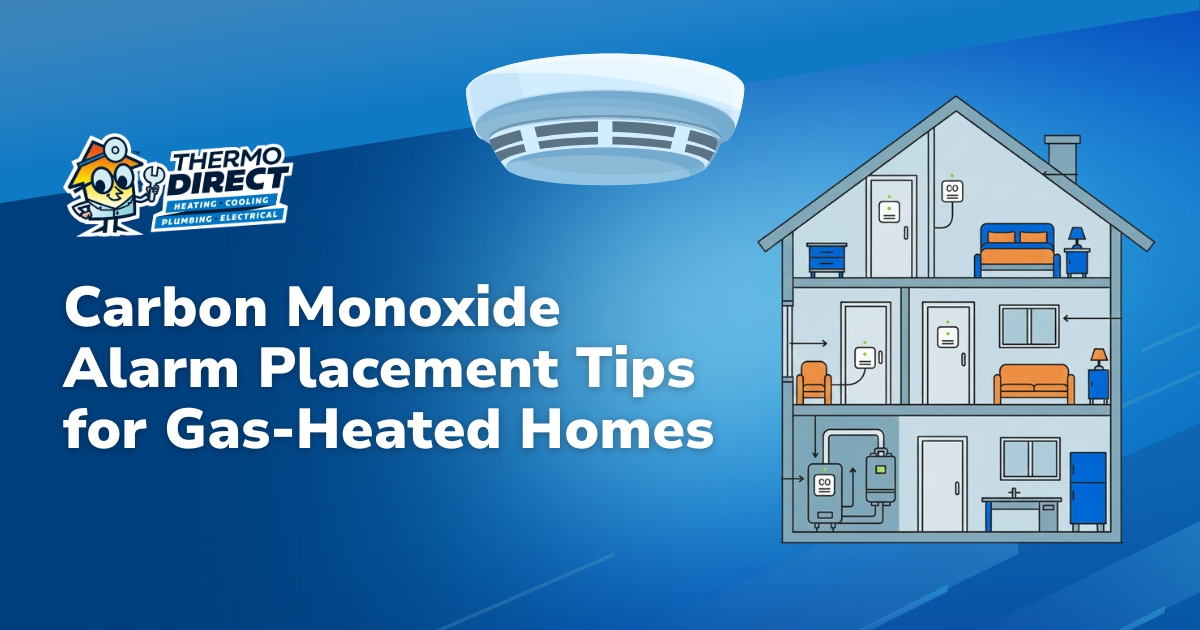
If you’re wondering where to place carbon monoxide alarms, the answer is straightforward: install them on every level of your home, near sleeping areas, and close — but not too close — to gas appliances.
If you heat your home using natural gas, you need to have carbon monoxide detectors on every floor of your house, including your basement. Correct carbon monoxide alarm placement is very important to make sure your alarm properly detects this toxic gas and doesn’t trigger false alarms. Follow this guide from Thermo Direct to learn about how to get optimal coverage with your CO alarm placement in the home.
Why Carbon Monoxide Alarm Placement Matters in a Gas-Heated Home
Carbon monoxide is dangerous because it’s an invisible and odorless poison. If your carbon monoxide detector placement is off, even by a few feet, it may delay detection or trigger false alarms.
Poor ventilation doesn’t just affect carbon monoxide detection, it can also impact overall indoor air quality, especially in homes with gas furnaces and water heaters.
When considering where to put carbon monoxide detectors, it’s important to understand that a CO leak can spread from your basement or ground floor to your upstairs, so having multiple detectors creates layers of protection, and allows for:
- Early detection while you sleep
- Protection near high-risk areas like furnaces and water heaters
- Reduced false alarms from normal appliance operation
Therefore, carbon monoxide detectors should be placed outside of bedrooms, in hallways where CO gas can build up, in the main living area, and near gas-powered appliances like furnaces and water heaters.
If you suspect your furnace is contributing to CO concerns, it’s important that you schedule professional furnace repair right away. A qualified technician will inspect for leaks, airflow issues, and combustion problems to ensure your system is operating safely and efficiently, helping protect both your home and your family.
Electrical issues can also play a role in HVAC performance and safety. Thermo Direct’s electrical services can help identify wiring problems, breaker issues, or control failures that may affect your furnace or connected systems, ensuring your home’s heating and safety systems are working as intended.
How Many Carbon Monoxide Alarms Does Your Home Need?
Generally, you will need three to four carbon monoxide detectors in a gas-heated home. This is an important part of gas-heated home safety.
If your home is larger or multi-level:
- You may need 5 to 7 detectors
- Each sleeping zone should have coverage
- Every level — including basements — should be protected
Where Should Carbon Monoxide Alarms Go Near Bedrooms?
If all of your bedrooms are in one hallway, one CO detector in the hallway is all you need. However, if your bedrooms are spread out, you need multiple alarms for each sleeping area. These CO detector placements matter most, as carbon monoxide usually poisons people while they are asleep.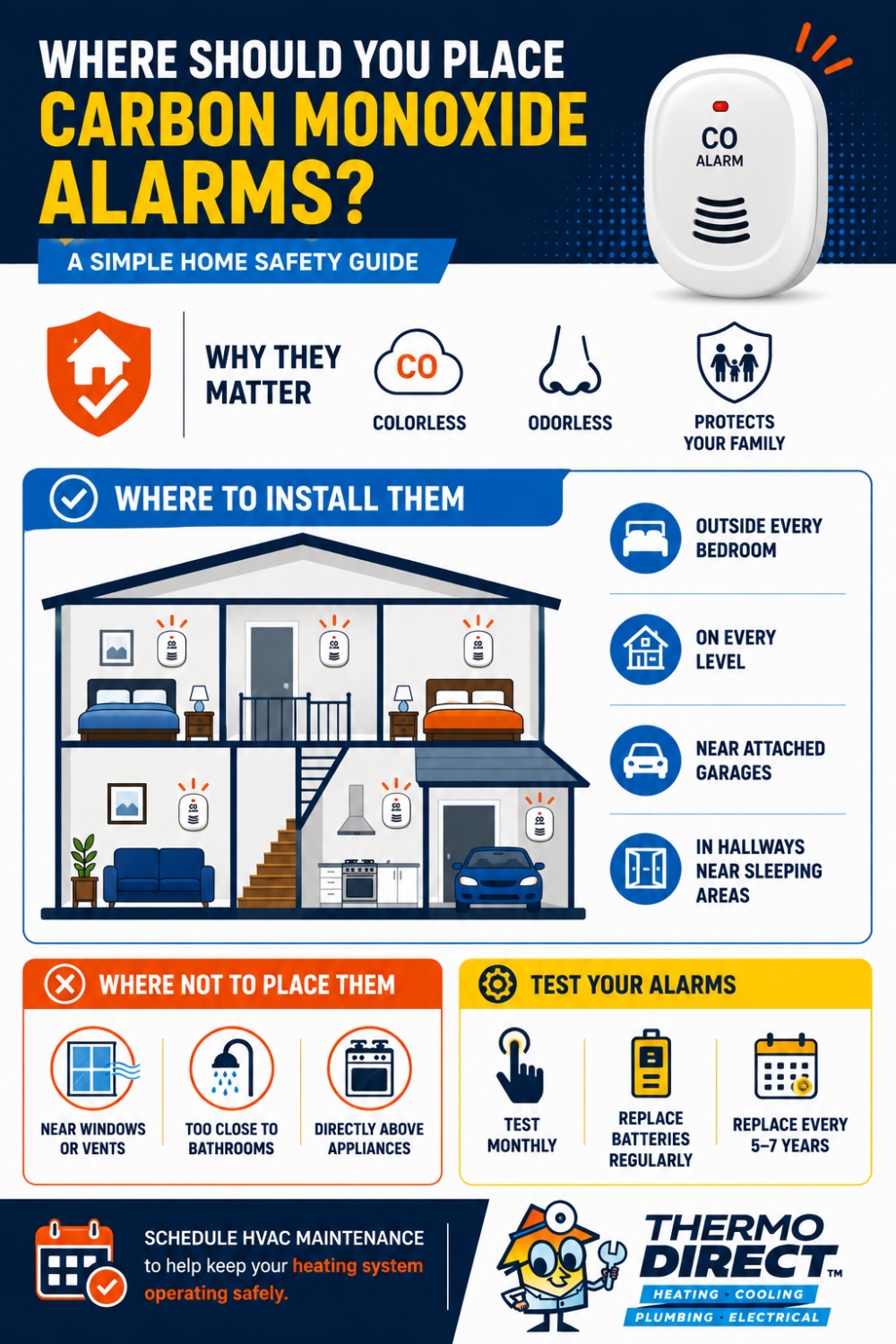
Carbon monoxide alarms near the bedroom should be installed in the hallway within 10 to 15 feet of bedroom doors. The key to effective CO alarm placement in home sleeping areas is simple: alarms should be close enough to wake you, but not blocked by doors or airflow issues that could delay detection.
Should You Place a Carbon Monoxide Alarm Near a Gas Furnace?
Yes — but placement distance matters. Carbon monoxide alarms for gas appliances should be placed strategically.
When installing a CO detector near a gas appliance or fireplace, affix it within 10 feet of the appliance, but never right next to it, as this will cause it to trigger whenever there is combustion in your appliance.
Gas-powered water heaters can also be a source of carbon monoxide if they are not properly vented or maintained. Like furnaces, they rely on combustion, which means a blocked flue, poor ventilation, or a faulty burner can allow CO to enter your home instead of safely exiting outside. Regular inspection of both your furnace and water heater helps ensure these systems are operating safely and not creating hidden risks in the home.
Where Not to Place Carbon Monoxide Alarms
Carbon monoxide alarm placement is critical as improper placement is one of the leading causes of false alarms.
Never install your carbon monoxide detector inside a bathroom or kitchen. These areas have high humidity and temperature fluctuations that can cause false alarms. However, if you have a gas-powered stove, install a detector in the room next to the kitchen.
Other areas where you should NOT install a CO alarm include:
- Garages
- Near windows and ceiling fans
- Dead air spaces like corners and where walls meet the ceiling
- Unheated areas like attics and crawl spaces
Should Carbon Monoxide Alarms Be High or Low on the Wall?
Unlike smoke alarms, where smoke rises, carbon monoxide mixes in with the home’s air. Because of this, both on the wall and on the ceiling work for carbon monoxide alarm placement. Install your detector at least five feet above the floor, or at eye level, so you can see it easily and hit the “test” button as needed.
For ceilings, install the detectors 10 to 12 inches away from the wall. Air doesn’t circulate as well in wall-to-ceiling corners, so this could delay your detector’s alarm. It’s best to check your manufacturer’s model instructions on where to best install the alarm.
The most important aspect is installing the detector near a sleeping area, either on the ceiling or on the wall.
Do North Carolina Homes Need Carbon Monoxide Alarms?
It’s strongly recommended that any home with gas appliances or attached garages should have CO alarms, but requirements vary.
In North Carolina specifically:
- CO alarms are typically required in newer homes.
- Older homes may not require them, but they are strongly recommended.
Always verify local code, especially when installing or upgrading systems.
Battery, Hardwired, or Smart CO Alarms: Which Is Better?
Homeowners today have more options than ever.
- Battery-powered: Easy to install, requires regular replacement.
- Hardwired: More reliable, often includes battery backup.
- Smart detectors: Send alerts to your phone.
No matter the type, knowing where to put your carbon monoxide detector matters more than the technology itself is critically important.
What Should You Do If Your Carbon Monoxide Alarm Goes Off?
Get everyone out of the home immediately, including your pets. Call 911 from outside and don’t re-enter until the fire department says it’s safe. Then contact Thermo Direct to identify and repair the CO source before using gas appliances again.
Never ignore an alarm, even if you suspect it’s false.
Why Is My Carbon Monoxide Alarm Chirping?
A chirping alarm is usually not detecting CO, it’s signaling a problem.
Common causes of chirping include:
- A low battery
- The end of the detector lifespan (expired)
- An internal fault
Using expired detectors: The average lifespan of a CO detector is five to seven years. After that, sensors degrade and become unreliable. Check the manufacturing date on your detectors and replace them as needed.
When Should You Call a Professional?
If you experience:
- Frequent false alarms
- Alarms near your carbon monoxide alarm gas furnace
- Concerns about gas appliances or ventilation
It’s time to bring in a professional.
Annual inspections help ensure your heating system is operating safely, especially in homes with gas appliances where carbon monoxide risks are higher. Professional heating services and gas line inspections can identify ventilation issues, leaks, or unsafe combustion before they become dangerous.
How Thermo Direct Can Help Raleigh-Area Homeowners Stay Safer
The best protection combines proper alarm placement with professional system care.
The best way to guarantee your home is safe and well-protected from carbon monoxide poisoning is with professional CO safety checks and annual gas unit maintenance. Carbon monoxide detectors save lives, but only when properly placed and maintained.
Combine your detectors with annual professional inspections of your gas lines and appliances for full protection. Homeowners across the Raleigh area trust Thermo Direct for reliable service, as reflected in our customer reviews, and flexible financing options are available to make safety upgrades and repairs more manageable.
For peace of mind, contact Thermo Direct today for a gas appliance safety inspection.
Frequently Asked Questions
Will my gas furnace set off a carbon monoxide detector during normal operation?
A properly functioning gas furnace shouldn’t trigger a CO detector if it is placed properly on the wall or ceiling. If your detector alarms during normal furnace operation, evacuate the home and call Thermo Direct for help.
Can I use a combination smoke and CO detector?
Yes, combination units work well and reduce the number of devices on your walls and ceilings. Just make sure you follow the guide above and install enough to cover all the recommended locations for both smoke and CO detection.
What should I do if my carbon monoxide detector goes off?
Get everyone out of the home immediately, including your pets. Call 911 from outside and don’t re-enter until the fire department says it’s safe. Then contact Thermo Direct to identify and repair the CO source before using gas appliances again.
What if I have an electric-powered home? Do I need a CO detector?
If you have no gas appliances, wood-burning or gas fireplaces, or an attached garage, your CO risk is minimal. However, if you have an attached garage where you park vehicles, install at least one detector in the space adjacent to it.
Will a carbon monoxide detector detect a gas leak?
No. CO detectors only sense carbon monoxide, not natural gas. You need a separate natural gas detector if you want to monitor for gas leaks.