
Summary
- A failing capacitor is one of the most common causes of bad AC capacitor symptoms, including warm air, humming, or failure to start.
- Warm air often happens when the compressor or fan motor cannot properly start due to electrical failure.
- Homeowners can safely check airflow and breakers, but capacitor diagnosis and replacement should always be handled by a professional.
- Delaying repair can increase strain on the compressor and reduce overall system reliability.
Why Warm Air From Your AC Can Be Frustrating
When your system is showing bad AC capacitor symptoms like warm air blowing from vents, it often feels like the entire cooling system has failed. In Raleigh homes, these issues commonly appear during times of peak cooling demand, when systems are running extended cycles with limited downtime between starts, and when you need them most.
What Does an AC Capacitor Do?
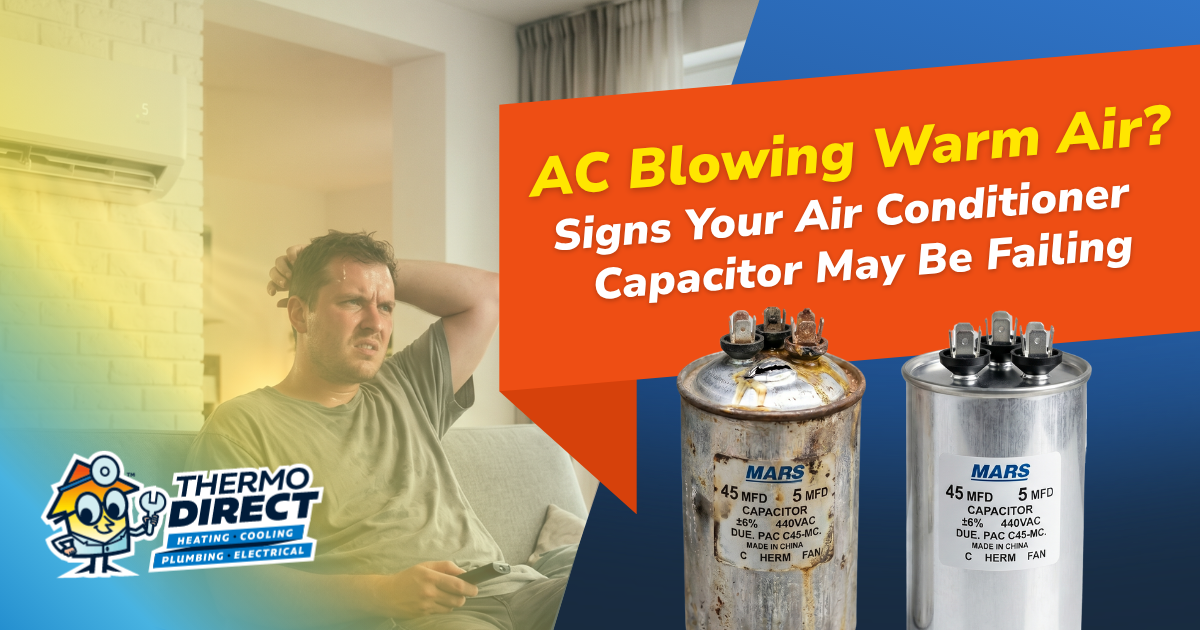
An AC capacitor stores and releases electrical energy to help start and run key components inside your system. Your HVAC system typically has two critical motors:
- The compressor inside the outdoor unit.
- The fan motor that moves air across the system.
Without a proper air conditioner capacitor, failure can happen as the compressor or fan motors struggle to start or fail entirely. A bad capacitor AC unit typically presents as humming, weak airflow, or a complete loss of cooling.
Can a Bad Capacitor Cause Your AC to Blow Warm Air?
If your AC is blowing warm air, or running without cooling, a failing capacitor can be the cause. In Raleigh homes, this issue often appears during periods of heavy daily use when systems start multiple times throughout the day.
When your AC compressor is not starting it’s often because the capacitor cannot provide enough starting energy. In this case, the compressor fails to engage, and the fan only circulates warm or room-temperature air, so while airflow feels normal, the cooling cycle never properly begins.
Warning Signs Your Cooling System Is Struggling to Start
Inconsistent startup behavior is one of the earliest indicators of electrical strain in the system. Common signs include:
- AC humming but not starting when the outdoor unit engages.
- AC fan not spinning even though power is present.
- AC starts then stops shortly after turning on.
- AC short cycling.
These patterns typically point to electrical strain inside the capacitor or related components rather than thermostat or airflow problems. In residential systems, this often progresses until cooling becomes unreliable.
What Homeowners Can Safely Check First
Before calling for service, homeowners can perform a few safe checks, especially in many Raleigh homes where HVAC systems are mid-life installations that still respond well to basic troubleshooting.
- Confirm the thermostat is set to cool and below room temperature.
- Check the breaker panel for a tripped HVAC circuit.
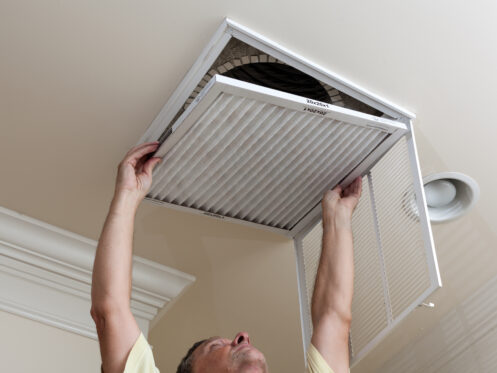
- Inspect the air filter for heavy blockage.
- Verify the outdoor unit has power.
These steps help rule out basic causes behind an AC unit not cooling, but don’t diagnose capacitor health. Capacitors store electrical charge even when the system is off, making internal inspection unsafe without proper tools.
What Not to Touch Inside the Outdoor Unit
Many HVAC capacitor problems are electrical issues that require testing equipment to confirm whether a capacitor is holding proper voltage and capacitance. Visual inspection alone is not reliable. That said, inside the outdoor condenser are high-voltage components that should not be handled without training.
Attempting AC capacitor replacement without training can damage the compressor or fan motor if handled incorrectly. More importantly, even when power is off, capacitors can retain an electrical charge, posing a significant safety risk.
When Warm Air Means It Is Time to Call for AC Repair
Warm air becomes more serious when startup issues begin affecting cooling performance consistently. Homeowners often notice the system running during peak demand but failing to reduce indoor temperatures. This is commonly associated with air conditioner capacitor failure or related electrical issues. Issues that can look similar include:
- Capacitor failure
- Contactor failure
- Compressor start relay issues
- Loose or damaged wiring
- Voltage supply problems
In many residential systems, especially mid-life equipment common in Raleigh’s suburban homes, these faults can produce identical symptoms, typically as warm air or a system that runs but does not cool. Professional diagnosis and repair becomes important.
Can Waiting Make the Problem Worse?
In some cases, what begins as a simple capacitor issue can escalate if left unresolved. A weakening capacitor forces the compressor and fan motors to repeatedly attempt startup. This increases heat and wear across the system and can lead to:
- Compressor strain from repeated failed starts.
- Fan motor wear from inconsistent power delivery.
- Electrical stress on contactors and wiring.
- Increased short cycling and reduced efficiency.
Not every capacitor issue leads to major damage, but continued operation under strain increases the likelihood of broader system failure.
Repair or Replace: What Makes the Most Sense?
A capacitor is a sealed electrical component. When it fails, it is not repaired internally and is instead replaced. AC capacitor replacement is typically straightforward when:
- The system is otherwise in good condition.
- The capacitor is the only failing component.
- Cooling returns to normal after startup issues are resolved.
If multiple components are failing or the system is older, a technician may recommend broader system evaluation. In those cases, repeated small repairs can become less cost-effective than addressing the overall system condition.
At Thermo Direct, financing options are available for larger HVAC repairs or system replacement when it becomes the more practical long-term solution.
How to Prevent Future Capacitor and Cooling Problems
Capacitor failures are often caused by heat exposure, system strain, and normal wear over time, especially in systems that run frequently as outlined by the US Department of Energy. To reduce risk:
- Keep outdoor units clear of debris.
- Schedule seasonal HVAC maintenance.
- Avoid overworking the system during extreme heat.
- Replace aging systems before repeated electrical failures occur.
Preventative maintenance helps reduce unexpected breakdowns and improves overall system reliability.
Why Capacitor Problems Are Common in Raleigh Homes
Raleigh’s long, humid summers and extended cooling seasons place consistent strain on residential HVAC systems. Air conditioners often run for long daily cycles, increasing wear on electrical components.
Small electrical weaknesses become visible more quickly in Raleigh homes than in milder climates, especially during peak summer demand when these systems have limited downtime between cycles.
How Thermo Direct Can Help With AC Repair
Thermo Direct provides diagnostic and repair services for air conditioner capacitor failure and related electrical issues, including systems blowing warm air.
Our technicians inspect the full cooling system to determine whether the capacitor is the root cause, or if other electrical components are contributing to the issue, and provide accurate diagnosis with targeted repair recommendations. Contact us today to schedule your next service.
Frequently Asked Questions
Can a bad capacitor make my AC blow warm air?
A failing capacitor can cause warm air because the compressor or fan motor may not start correctly. Without enough electrical support, the system may run without completing a cooling cycle, resulting in air that feels unconditioned.
What are the signs of a bad AC capacitor?
Common signs include humming without starting, weak airflow, fan not spinning, or repeated start and stop cycles. These symptoms indicate the system is not receiving consistent electrical support during startup.
Is it safe to keep running my AC with a bad capacitor?
Running the system with a failing capacitor is not recommended. Continued operation can increase strain on the compressor and fan motors, which may lead to more extensive system failure during peak cooling demand.
Why is my AC short cycling?
A failing capacitor can cause AC short cycling capacitor issues, however other causes of short cycling include airflow restrictions, refrigerant issues, thermostat faults, or electrical component failures that interrupt normal operation.