
Key Highlights
- To power central AC, you’ll need at least an 11-kWh generator.
- Air conditioners require up to three times their running watts to start up, which must be factored into generator sizing.
- Don’t forget to factor in power needs for your lighting, refrigerator, and other devices.
- Hiring an HVAC pro for a load calculation can help you choose the right generator size.
It’s always good to have a backup plan, and nothing provides peace of mind like knowing that you have a generator ready to power your AC in case of an outage during a hot summer day. But what size generator do you need to power the AC reliably? As a general guideline, you’ll need at least an 11-kWh generator for a two-ton AC, but there are several factors that can affect the generator size you actually need. Learn everything you need to know about generators and air conditioning and when to call a pro for help.
How Much Generator Power Does a Central AC Need?
When determining the size of the home generator for air conditioning you need, the size of your AC unit is the most crucial factor. You need at least an 11-kWh generator to power a two-ton AC unit. The recommended generator size for a three-ton AC unit rises to 14 kWh.
A common mistake is only looking at how much energy your AC unit uses when running. For example, a 14 SEER, three-ton AC unit would use about 3,500 watts every hour. But when an AC unit starts, it draws about two to three times as much power as when it runs, which is known as AC starting watts versus running watts. This means that to power your AC unit, your generator would need to produce at least seven to 10.5 kWh of AC starting watts.
How Do You Find Your AC’s Electrical Requirements?
To find out how many watts an air conditioner uses, you can check the rating plate on the unit itself or refer to your system’s manual. Check for information on voltage (V) ratings, minimum circuit ampacity (MCA), and maximum overcurrent protection (MOCP). This information should help you narrow down your generator options and find one that runs the AC and other devices in your home.
How to Estimate the Generator Size You Need
You also need to consider what other appliances and devices you’ll use during a blackout when deciding what size generator to choose for your house. Make a list of all necessary devices and how much power they use. This allows you to estimate your total energy requirements and choose a generator.
What Else Will You Run During the Power Outage?
If the power goes out, you’ll want to make sure that you can power not only your AC but also your other devices and appliances, such as:
- Lighting
- Refrigerator
- Freezer
- Outlets
- Internet
Depending on your needs, you may need to run more than these essentials. Be sure to tally up everything you need to run to make sure you choose the right whole-house generator size.
Can a Portable Generator Run Central Air?
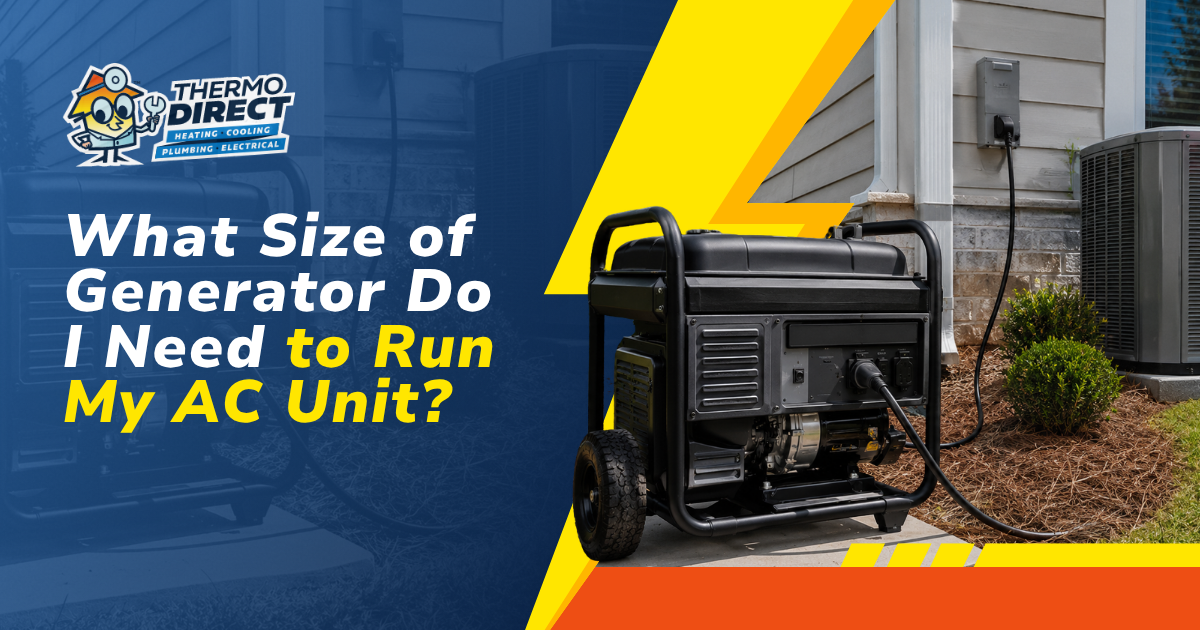
Can a generator run central air? A standby generator definitely can, but portable generators aren’t as flexible. The issue with portable generators for central air is that they only work with things that you can plug directly into them. This means that you could use a portable generator outside your house and run an extension cord to power a window AC unit or even your refrigerator. However, you wouldn’t be able to power your home’s central AC or any other hard-wired appliances with a portable generator.
Can a Soft Starter Reduce the Generator Size You Need?
One way to reduce the generator size needed is to use a soft starter, which greatly reduces the starting watts required to get your AC running. This means you can choose a generator that supplies only the necessary running watts, which should reduce its size (and cost).
Warning Signs Your Generator Is Too Small
Using an undersized generator can lead to several AC electrical issues. Signs to look out for include:
- Immediate shutdowns on compressor startup
- Generator stalling or heavy engine choke
- Severe lighting dims and flickers
- Running an indoor fan with a shut-down outdoor unit
- Repeated AC resets
Generator and AC Safety Mistakes to Avoid
To ensure your safety when powering an AC off a generator, avoid these common mistakes:
- Running the generator indoors or within 20 feet of windows, doors, or vents
- Running generators exposed to rain or standing water
- Adding fuel to the generator while it’s running or hot
- Overloading wattage limits while running AC (especially if you don’t have surge protection)
When Should You Get a Professional Load Calculation?
If you’re buying a generator to power your home’s air conditioner, getting a load calculation first is always a good choice. By entering the AC load into a generator size calculator, you’ll ensure your generator can run the AC all day without issue.
How Thermo Direct Can Help With Backup Power and Cooling
Blackouts and crushingly hot summer days are common in North Carolina, so having a reliable backup generator ready to run your cooling system is always a good idea. Our team helps homeowners set up a reliable backup power system that runs their AC and powers other devices. To learn more about backup power for cooling or to get a generator installed on your property, contact us today.
Frequently Asked Questions
Will a 10,000-watt generator run central air?
Yes, a 10,000-watt generator should run a central air conditioner. You will need to manage starting watts and be mindful of simultaneous loads when doing so, however.
Can I run my air conditioner and refrigerator on the same generator?
Yes, you can run an AC and a refrigerator on the same generator. You’ll need a generator with a capacity of at least 3,500 watts to ensure reliable power to both systems.
Do I need a transfer switch to power my AC from a generator?
If you plan to power a hardwired AC with a portable generator, you will need a transfer switch. This is the only way to safely power a hardwired device with an external generator.