
Core Highlights
- Proper electrical grounding protects you from electrical shock, fires, and severe damage to electronics and appliances.
- Signs of inadequate grounding include flickering lights, buzzing sounds, frequent circuit breaker trips, and feeling a mild shock when flipping switches or touching appliances.
- The pros at Thermo Direct provide several residential electrical grounding services to keep you and your home safe.
The Invisible Safety System Protecting Your Home
When you return home after a nice day at the North Carolina Museum of Art in Raleigh, the last thing you want to face is a serious issue with your home’s electrical system. The experienced team at Thermo Direct Heating, Cooling, Plumbing, and Electrical provides a variety of reliable home electrical grounding services, including electrical panel upgrades, whole-house surge protection, and more.
What Is Electrical Grounding and How Does It Work?
Grounding in electrical safety is the process of providing a separate pathway parallel to your electrical system’s live and neutral wires, so fault current flows back to the ground or earth. It protects against fire and electrical shock in the event of damage to your home’s electrical system, an electrical surge, or a lightning strike. Bonding connects the grounded system to non-current-carrying equipment. Grounding for new electrical installations and upgrades is an industry best practice and a requirement of many electrical codes and regulations.
How electrical grounding works
Here’s how proper grounding of electrical systems works:
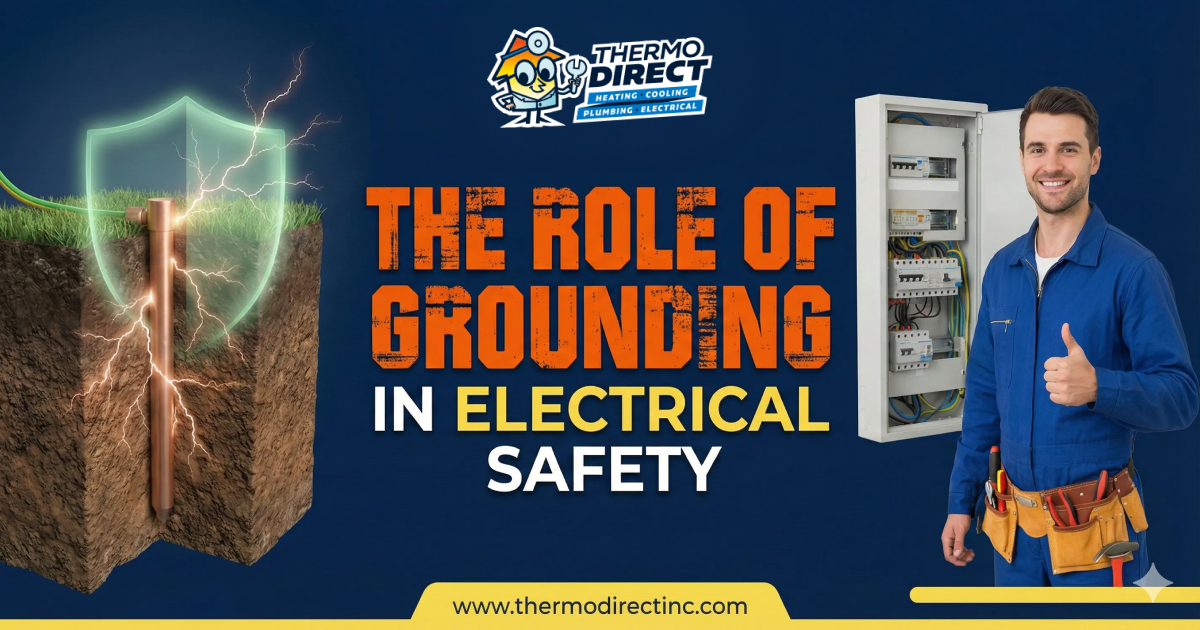
- Electrical system grounding, or circuit grounding, connects your home’s neutral wire to the ground through a grounding electrode (a conductive metal rod or plate) to protect equipment and appliances from electrical faults and surges.
- Equipment grounding provides localized protection to individual equipment or electrical devices by connecting the non-current-carrying components of equipment or their external bodies to the ground.
- If a large, sudden surge of current goes through the ground wire, it causes the circuit breaker to trip, which immediately cuts power to the attached device or appliance to eliminate the risk of shock.
Why Proper Electrical Grounding Is Essential for Your Safety
Proper electrical grounding is vital to your safety and to the safety of your home. This is why grounding is so important when it comes to electrical safety:
- Grounding creates an alternative, low-resistance path for electrical faults so the excess current flows and discharges safely into the ground, protecting exposed components on electrical outlets and household appliances as a means of electrical shock prevention.
- Ground wire also provides electrical shock protection by providing an alternative path for excessive current during a lightning strike.
- An electrical grounding system helps prevent electrical fires by diverting excessive current away from appliances and equipment.
Understanding the Two Levels of Grounding Protection
The two levels of grounding protection are system grounding and equipment grounding. It’s important to understand the differences between these types of grounding protection to make sure your home is properly grounded.
System/circuit grounding
This type of grounding protects your home’s entire electrical system by connecting the neutral wire to the earth through a ground rod or water pipe. Doing this establishes a stable voltage reference and a path for large fault currents. With system or circuit grounding, breakers trip quickly during a fault to prevent an electrical fire.
Equipment grounding
Equipment grounding protects people and equipment from electrical shock by keeping metal appliances and enclosures at zero potential, even if a live wire touches the metal. It uses a separate equipment grounding conductor, like the third wire in a three-prong plug that runs from the appliance to the electrical panel and to the system ground. This method provides a safe path for fault current that moves it safely away from the person and equipment to the earth.
Warning Signs Your Home Has Inadequate Grounding
Knowing the signs of inadequate grounding helps you make an informed decision to contact a licensed electrician for electrical grounding service:
- You feel a mild shock: If you notice a mild tingle or shock whenever you flip a switch or touch an appliance, you may have a problem with your grounding system.
- Overheating: Appliances that aren’t properly grounded tend to overheat, a common sign of inadequate grounding.
- Buzzing noises: A buzzing or unusual humming sound from your electrical outlets and switches could be a sign of a damaged or loose grounding connection.
- Flickering lights: If your lights flicker or dim, or if your bulbs burn out quickly, it may be due to unstable voltage resulting from inadequate grounding.
- Burning smells: A burning or scorching smell coming from outlets or appliances is a serious sign of overheating or arcing that may result in a dangerous fire due to improper or inadequate grounding.
Common Causes of Grounding Problems in Homes
There may be several underlying causes of grounding problems in homes. Here are some of the most common reasons why a home may have a grounding issue:
- Loose wires that aren’t securely attached to panels, outlets, or ground rods.
- The ground continuity is interrupted by faulty outlets or improper wiring.
- Improper wiring using metal conduit as a ground without proper bonding, or incorrectly replacing grounded three-prong outlets with two-prong outlets, which are not grounded.
- Older homes that were built before modern grounding requirements may have missing safety grounds.
- Moisture and minerals from the soil can cause ground rods or water pipes to corrode over time.
- Damaged wiring can create an unintended path for current, resulting in improper and unsafe grounding.
- DIY electrical installations or modifications that are not done per current codes and standards.
- Installing new major appliances like whole-home generators and EV chargers without upgrading the grounding system.
Can You Add Grounding to an Older Home?
Electrical grounding became a national standard in the U.S. in 1962 but many homes built before this time don’t have proper or adequate grounding. It’s worth it to schedule a grounding inspection and add grounding to an older home to protect yourself from electrical shock and to help prevent a serious electrical fire.
Electrical Grounding vs. Surge Protection: Understanding the Difference
Grounding stops large fault currents, surge protection stops voltage spikes. Using surge protection protects electronic equipment from short, sudden bursts of high voltage by diverting it away from the device and into the ground wire. Look for surge protectors that feature special “grounded” or “protected” lights to make sure that your valuable devices and electronics are protected.
Why Choose Thermo Direct for Your Electrical Grounding Needs
At Thermo Direct, you’ll receive reliable grounding services performed by our certified electricians. Our team designs the grounding network for new installations and employs the best techniques to deliver excellent workmanship with every job. We can also conduct a thorough inspection of your entire electrical system, identify issues with the grounding, and perform all the repairs required to get your home properly grounded using the highest-quality materials.
Financing Options for Electrical Grounding and Safety Upgrades
Hiring an electrician for grounding repair or safety upgrades doesn’t have to be overwhelming. Thermo Direct has several payment and financing options to choose from. We’ve partnered with GoodLeap, Optimus, and Synchrony Financial to give you easy financing for your electrical grounding on a budget. Qualified customers receive low interest rates and convenient monthly payments for a safer home on a budget.
Service Areas
Thermo Direct provides professional electrical grounding and surge protection services throughout:
- Raleigh
- Cary
- Apex
- Garner
- Wake Forest
- Surrounding Triangle communities
Stay Grounded and Safe With Expert Electrical Services
At Thermo Direct, we always strive to get the job done right. You can be sure of exceptional service as we wire or rewire your home for safety with proper grounding. Contact us today for professional wiring and a comprehensive range of electrical services if you are in Raleigh and the surrounding areas.
Frequently Asked Questions:
What does a ground wire do?
A ground wire provides a safe and low-resistance path for excess electricity to travel directly into the earth. This wire moves the electricity to the ground during a fault, surge, or short circuit, acting as a safety mechanism to prevent fires, electrical shock, and damage to devices and appliances.
What’s the difference between grounding and bonding?
Grounding connects electrical systems to the earth, while bonding connects non-current-carrying metal parts to keep them at the same electrical potential. The grounding process provides a safe path for fault current, while bonding prevents sparks and shock hazards.
Do all appliances need to be grounded?
Not all appliances need to be grounded, but those with metal casings, like refrigerators, microwaves, and washing machines, do require grounding with a three-prong plug to prevent electrical shock. Other small appliances with plastic casing, like lamps and phone chargers, can use a two-prong plug and don’t require grounding.