
Quick Recap
- Make sure to install carbon monoxide alarms on every floor of your house, outside of bedrooms, and within 10 feet of gas appliances like furnaces and water heaters.
- Detectors should be mounted at least five feet high on walls or on ceilings, away from high-humidity areas like windows and vents.
- A single-floor home heated by gas needs three to four detectors throughout the house.
- Don’t place alarms in bathrooms, kitchens, garages, or within five feet of gas appliances, as normal combustion could trigger false alarms
If you heat your home using natural gas, you need to have carbon monoxide detectors on every floor of your house, including your basement. Correct carbon monoxide alarm placement is very important to make sure your alarm properly detects this toxic gas and doesn’t trigger false alarms. Follow this guide from Thermo Direct to learn where to install carbon monoxide detectors.
The Best Locations for Carbon Monoxide Detectors
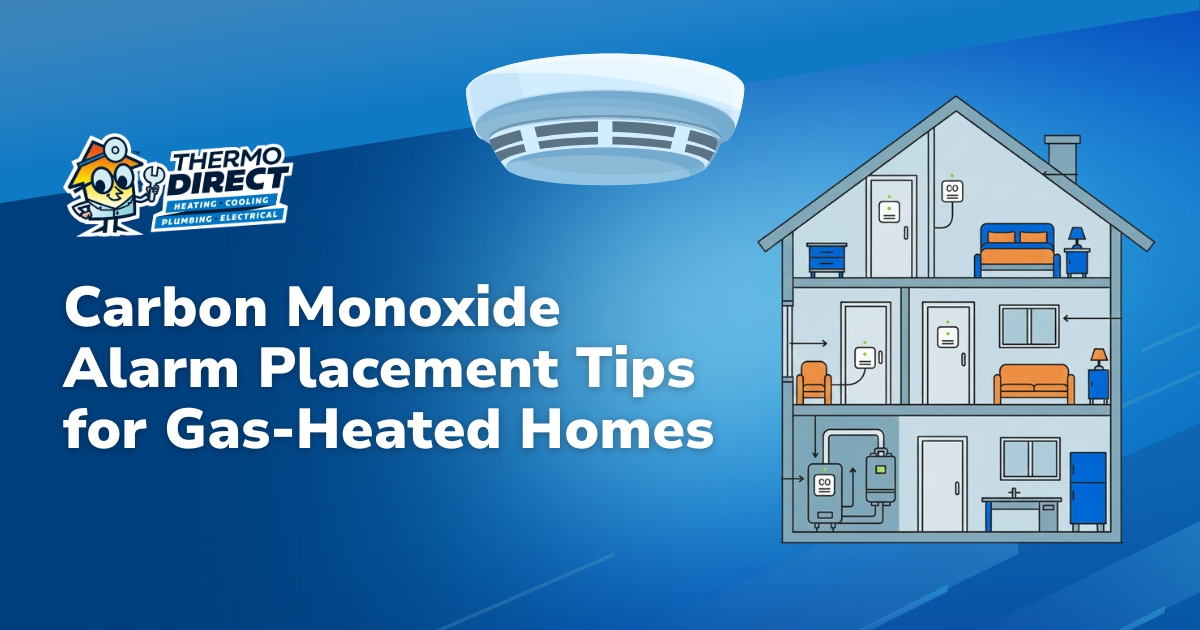
Place them outside of bedrooms, in hallways where CO gas can build up, and near gas-powered appliances like furnaces and water heaters. A carbon monoxide leak can spread from your basement to your upstairs, so having multiple detectors creates layers of protection.
When installing a CO detector near a gas appliance or fireplace, affix it within 10 feet of the appliance, but never right next to it, as this will cause it to trigger whenever there is combustion in your appliance.
If all of your bedrooms are in one hallway, one CO detector in the hallway is all you need. However, if your bedrooms are spread out, you need multiple alarms for each sleeping area. These CO detector placements matter most, as carbon monoxide usually poisons people while they are asleep.
It’s also a good idea to install a detector in the room attached to your garage, as car exhaust can seep through your doors and walls.
Where NOT to Install Carbon Monoxide Alarms
Never install your carbon monoxide detector inside a bathroom or kitchen. These areas have high humidity and temperature fluctuations that can cause false alarms. However, if you have a gas-powered stove, install a detector in the room next to the kitchen.
Other areas where you should NOT install a CO alarm include:
- Garages
- Near windows and ceiling fans
- Dead air spaces like corners and where walls meet the ceiling
- Unheated areas like attics and crawl spaces — temperature extremes affect detector performance.
Should a Carbon Monoxide Detector Go on the Wall or Ceiling?
Unlike smoke alarms, where smoke rises, carbon monoxide mixes in with the home’s air. Because of this, both on the wall and on the ceiling work for carbon monoxide alarm placement. Install your detector at least five feet above the floor, or at eye level, so you can see it easily and hit the “test” button as needed.
For ceilings, install the detectors 10 to 12 inches away from the wall. Air doesn’t circulate as well in wall-to-ceiling corners, so this could delay your detector’s alarm. It’s best to check your manufacturer’s model instructions on where to best install the alarm.
The most important aspect is installing the detector near a sleeping area, either on the ceiling or on the wall.
How Many Carbon Monoxide Detectors Does a Gas-Heated Home Need?
Generally, you will need three to four carbon monoxide detectors in a gas-heated home. This is an important part of gas-heated home safety. Always have one outside the bedroom areas, one near the gas furnace, and one in the main living area.
If you have a bigger household with more than three bedrooms on multiple floors, you probably need up to seven detectors for maximum coverage. Count all of your gas appliances, that is, water heaters, furnaces, gas fireplaces, gas ovens, and boilers, and make sure you have a detector near each.
Carbon monoxide detectors are relatively cheap, and having more provides better protection. If you’re in doubt about whether you should add a detector in an area, just add one.
Common Mistakes Homeowners Make With CO Detector Placement
Below are the biggest mistakes homeowners make with their CO detectors:
- Installing only one: The biggest mistake is only installing one detector in the hallway by the bedrooms and thinking you’re good to go. One detector will not cover a multi-level home with gas appliances in the basement.
- Not testing CO detectors: Test your detectors monthly and replace the batteries annually for battery-powered units. Hardwired detectors with battery backup also need those backup batteries replaced.
- Installing it too close to a gas appliance: This causes multiple false alarms and usually causes the homeowner to ignore the detector or remove it, which defeats the purpose.
- Using expired detectors: The average lifespan of a CO detector is five to seven years. After that, sensors degrade and become unreliable. Check the manufacturing date on your detectors and replace them as needed.
- Maintenance habits: Detectors are your last line of defense, not a substitute for proper maintenance of your gas-powered appliance.
Follow these carbon monoxide alarm tips from the Environmental Protection Agency.
Service Area – Carbon Monoxide Safety Services in Raleigh-Durham
Thermo Direct provides comprehensive gas appliance safety inspections, CO testing, and gas line services throughout the Raleigh-Durham area. Our technicians inspect and repair furnaces, water heaters, and gas lines to identify CO risks before they endanger your home and family.
We service all areas, including:
- Raleigh – 27610, 27604
- Durham – 27703
- Cary – 27513
Protect Your Gas-Heated Home With Professional CO Safety and HVAC Services
The best way to guarantee your home is safe and well-protected from carbon monoxide poisoning is with professional CO safety checks and annual gas unit maintenance. Carbon monoxide detectors save lives, but only when properly placed and maintained. Combine your detectors with annual professional inspections of your gas lines and appliances. For peace of mind, contact Thermo Direct today for a gas appliance safety inspection.
Frequently Asked Questions
Will my gas furnace set off a carbon monoxide detector during normal operation?
A properly functioning gas furnace shouldn’t trigger a CO detector if it is placed properly on the wall or ceiling. If your detector alarms during normal furnace operation, evacuate the home and call Thermo Direct for help.
Can I use a combination smoke and CO detector?
Yes, combination units work well and reduce the number of devices on your walls and ceilings. Just make sure you follow the guide above and install enough to cover all the recommended locations for both smoke and CO detection.
What should I do if my carbon monoxide detector goes off?
Get everyone out of the home immediately, including your pets. Call 911 from outside and don’t re-enter until the fire department says it’s safe. Then contact Thermo Direct to identify and repair the CO source before using gas appliances again.
What if I have an electric-powered home? Do I need a CO detector?
If you have no gas appliances, wood-burning or gas fireplaces, or an attached garage, your CO risk is minimal. However, if you have an attached garage where you park vehicles, install at least one detector in the space adjacent to it.
Will a carbon monoxide detector detect a gas leak?
No. CO detectors only sense carbon monoxide, not natural gas. You need a separate natural gas detector if you want to monitor for gas leaks.