

What to Know:
- Your outdoor AC unit should stay clean to support good airflow, prevent overheating, and support a longer system lifespan.
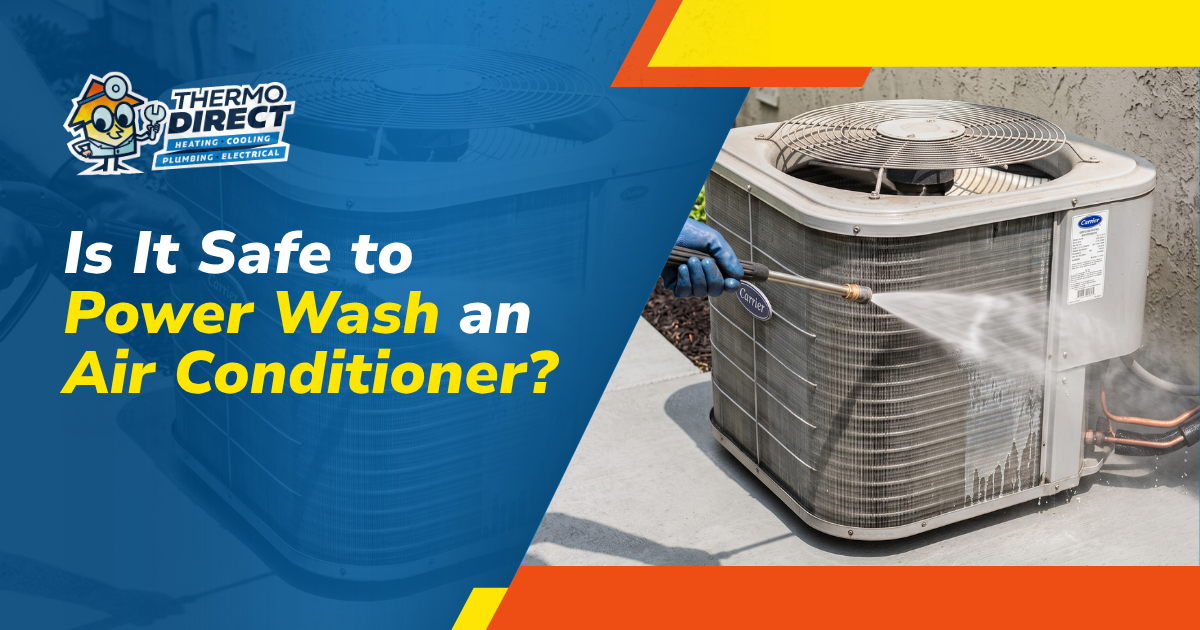
- Pressure or power washing the outdoor unit is never recommended, as it can lead to refrigerant leaks, damage fins and coils, destroy seals, and push debris deeper into the system.
- A safe method is to use a bucket of soapy water and a sponge, or a standard garden hose, to gently rinse the outdoor unit clean.
With abundant humidity and plenty of trees in Raleigh and surrounding areas, it’s important to know how to properly clean an outside AC unit to prolong system lifespan. However, you should never pressure wash this part of your air conditioner. Outdoor units can tolerate normal weather, but a concentrated pressure-washer stream is much different from rain. If your outdoor unit is blocked or dirty, mold and mildew can form, along with a range of other issues. The experienced team at Thermo Direct Heating, Cooling, Plumbing, & Electrical has helpful information on how to safely clean your outdoor AC unit.
Can You Pressure Wash an AC Unit?
When it comes to outdoor AC unit cleaning, many Raleigh area homeowners think power washing is a good solution. Most experienced HVAC technicians recommend that you never pressure or power wash your AC unit, as this can cause issues when the debris you’re removing gets kicked up and sprayed over the system. Powerful jets of water can bend condenser fins and coils that keep the AC from cooling, and they may damage seals and other important components that can lead to the need for AC repairs.
Why High-Pressure Water Can Damage the Condenser
You may wonder if you can spray water on an AC unit, and the answer depends on the method you use. High-pressure jets of water from power washing can seriously damage the outdoor condenser unit, but gently rinsing it off with a garden hose is typically a safer alternative. If the condenser gets flooded with water, mold and mildew may form, and it can also lead to structural damage.
Here’s why high-pressure water can damage your AC condenser:
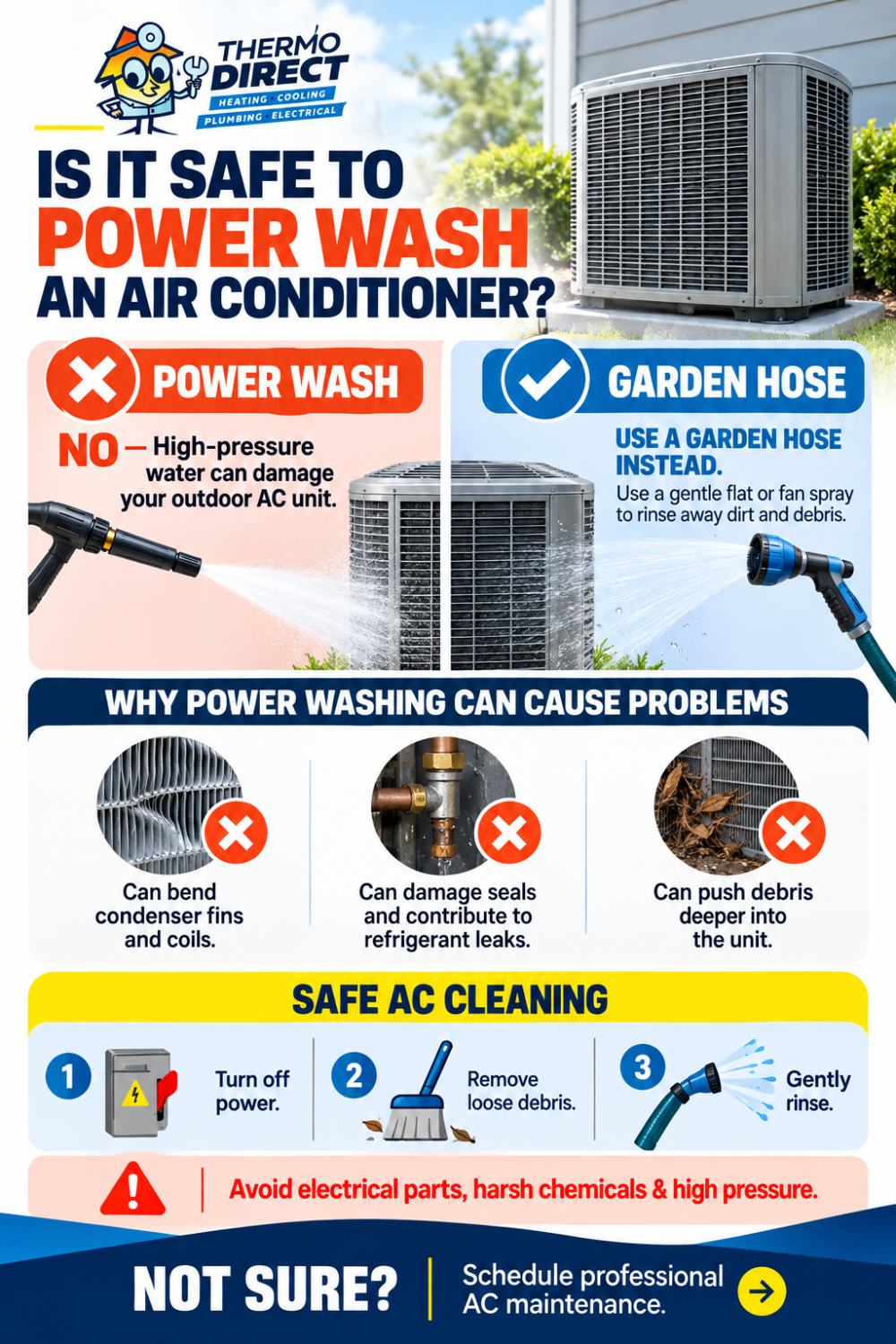
- Adds more debris to coils: When cleaning AC condenser coils with pressure washing, debris can ricochet into your AC unit, pushing dirt deeper into the system instead of washing it away.
- Destroys the seals: Using a pressure washer can rupture the seals that keep refrigerant inside your AC, causing it to leak, polluting the air and reducing AC performance and efficiency.
- Bends important components: If you don’t know how to clean AC condenser coils safely, it can bend and damage vital components like the fins, blades, and coils designed to keep your air conditioner running smoothly.
- Creates further damage: Pressure washing the outdoor unit can create larger gaps that open the system up to more debris, wear down the fan motor, and lead to cracks that cause dangerous and costly refrigerant leaks.
Pressure Washer vs. Garden Hose
Keeping the outdoor condenser clean is an important part of good routine preventive maintenance. Can you hose down an AC unit instead of using a pressure washer? Using a standard garden hose is a safe way to gently clean your air conditioner. Garden hoses at low to medium pressure can easily clear dirt and debris without bending the soft copper and aluminum coils.
When using your hose, place the nozzle on a gentle flat or fan setting and slowly spray the unit from top to bottom at a 45-degree angle. Using a bucket of soapy water and a sponge is another safe way to remove dirt from the outdoor unit. If you’re not sure you can clean the outdoor AC unit safely, contact Thermo Direct for professional condenser coil cleaning.
How To Clean Your Outdoor AC Unit Safely
Learning to recognize dirty condenser coil symptoms helps you know when to clean the condenser. Follow these steps to safely clean the outdoor AC unit for your Raleigh area home:
- Step one: Turn off the power to the AC at the main electrical panel by switching off the breaker, and turn off the metal outdoor disconnect box mounted on the wall near the unit.
- Step two: Clear excess debris from around the unit, including twigs, leaves, pine needles, and weeds.
- Step three: Carefully unscrew the top panel or metal fan cage and lift it off to access the inside, being mindful of all electrical wiring.
- Step four: Before using the hose, use a shop vac with the soft brush attachment to remove dirt and debris from the bottom pan.
- Step five: Once the excess debris is removed, use your sponge and soapy water or garden hose to gently rinse everything clean before securing the panel or fan cage back in place and turning the unit back on.
What Cleaning Products and Methods Should You Avoid?
It’s important to know what cleaning products and methods to avoid when cleaning the outdoor AC unit. These include:
- Pressure and/or power washing.
- Using stiff wire brushes or sponges.
- Applying harsh chemical formulas and bleach.
- Using heavy solvents and non-approved degreasers.
- Leaving soap on the unit without rinsing it clean.
- Directly spraying electrical parts and wiring with water.
- Failing to turn the power off before cleaning.
Signs the Unit Was Damaged During Cleaning
Look for these signs that may indicate your AC unit was damaged during cleaning:
- The fins are flat: Too much water pressure can crush the aluminum coil fins and flatten them.
- White residue: Using harsh cleaners or not rinsing off soap can create a white, crusty residue that corrodes the copper and aluminum inside the unit.
- AC won’t turn on: If water gets into the internal control panel, it can cause a short circuit or trip the breaker.
- Unusual noises: Buzzing sounds may mean that moisture is trapped in the electrical compartments, while rapid clicking noises may mean the capacitor is damaged.
When Should You Call an HVAC Professional?
If your AC is not cooling after cleaning the outdoor unit, it’s time to call an HVAC professional for help. Loud grinding or squealing sounds may indicate that water got into the fan motor bearings, washing away vital lubrication and causing significant damage without professional care. If you notice frost or ice on the refrigerant lines or the outdoor unit, contact our NATE-certified professionals.
It’s also recommended to call the pros if you experience frequent electrical issues, like the circuit breaker repeatedly tripping or the outdoor fan failing to spin when you turn the system back on after cleaning it.
How To Keep the Outdoor Unit Cleaner
Removing debris and routinely rinsing the condenser is helpful, but there are more ways to keep your outdoor unit cleaner:
- Schedule an annual HVAC tune-up to identify and address issues and make needed adjustments to support optimum efficiency and performance.
- Regularly trim nearby trees, shrubs, and weeds, and keep plants at least two to three feet away from the unit to minimize debris.
- Change the air filter as needed to reduce dust and other airborne particles to optimize airflow.
- Winterize your HVAC system and cover the outdoor condenser to protect it from damage caused by sleet, snow, and ice.
- Keep the return air ducts clean to prevent the system from sucking in dust and dirty, stagnant air that can cause breakdowns.
Get Professional Help Cleaning or Repairing Your AC Unit With Thermo Direct Today
If you live in The Triangle or the surrounding areas, count on Thermo Direct Heating, Cooling, Plumbing, & Electrical for professional cleaning and AC repairs. To learn more or schedule service, contact us today!